2026 Lyrid Meteor Shower Peak Guide
Use our 2026 Lyrid meteor shower peak guide to catch fireballs and dust trains this April. Find the best viewing times and dark sky locations near you.
METEORS
4 min read
Chasing Fireballs and Ancient Dust
There is a specific kind of magic that occurs only in the deep silence of an April night. As we approach the late-month peak of the oldest recorded meteor shower, our 2026 Lyrid meteor shower peak guide is here to help you navigate the stars. This year, the celestial mechanics have aligned to offer one of the best viewing windows for the Lyrids in recent memory.
The Lyrids are the calling card of Comet C/1861 G1 Thatcher, a long-period traveler that visits our inner solar system only once every 415 years. While the comet itself won't return until the 23rd century, it leaves behind a rich trail of debris that Earth plow into every April. For travelers at Lipton Travel, this represents the perfect opportunity for a spontaneous "Noctourism" getaway.
Why 2026 is the Year for the Lyrids
Every meteor hunter knows that the Moon is the ultimate "spoiler" for a good show. In our 2026 Lyrid meteor shower peak guide, the biggest news is the lunar schedule. On the peak night of April 21–22, 2026, the Moon will be a waxing crescent, roughly 35% illuminated.
Crucially, the Moon will set before 2:00 AM for most mid-latitude observers. This leaves the prime "witching hours" before dawn—when the radiant point is highest—completely dark and moon-free. It is during this window that the fainter meteors and the famous persistent dust trains become visible to the naked eye.
What to Expect from the Lyrids
Average Rates: You can expect roughly 15 to 18 meteors per hour under truly dark skies.
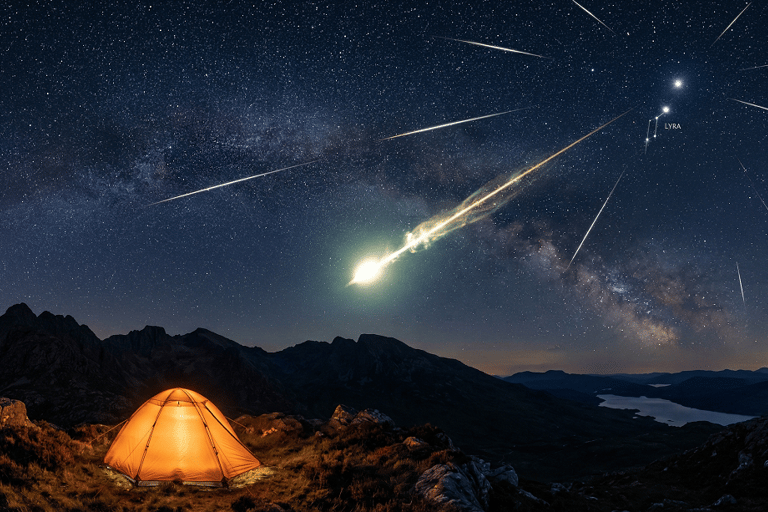
Fireball Potential: The Lyrids are famous for "outbursts" and bright fireballs that can cast shadows.
Speed: These meteors hit our atmosphere at a staggering 49 kilometers per second.
Optimal Locations Found in Our 2026 Lyrid Meteor Shower Peak Guide
To truly experience the Lyrids, you need to escape the orange dome of city light pollution. The Northern Hemisphere has the best seat in the house for this event, as the radiant point near the star Vega climbs higher in the northern sky. However, Southern Hemisphere observers can still catch "Earthgrazers"—meteors that streak horizontally across the horizon.
For the ultimate experience, we recommend booking a stay near a Certified Dark Sky Park. Locations like Big Bend National Park in Texas or Exmoor National Park in the UK offer the atmospheric clarity needed to see the fainter dust trains. You can find curated "Stargazing Retreats" and guided night hikes through Viator to ensure you're in the right place at the right time.
Essential Gear and Viewing Tips
While you don't need a telescope to enjoy a meteor shower, having the right optics can enhance the experience between sightings. We recommend a pair of wide-field binoculars to scan the area around the radiant for lingering smoke trails. The experts at High Point Scientific offer specialized low-light binoculars that are perfect for this specific task.
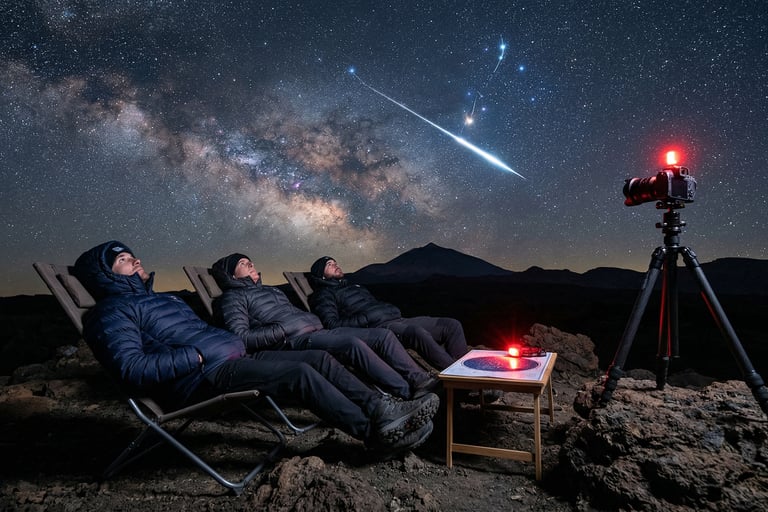
As noted in this 2026 Lyrid meteor shower peak guide, the best way to watch is to lie flat on your back. Avoid looking directly at the bright star Vega; instead, keep your gaze about 45 degrees away from it. This allows you to catch the meteors with their longest, most dramatic tails as they streak through the atmosphere.
Pro-Tips for Your April Outing
Patience is Key: It takes about 20 minutes for your eyes to fully adapt to the dark. Avoid looking at your phone during this time.
Thermal Comfort: April nights are deceptively cold, especially when you are stationary. Bring a high-quality thermal blanket or a zero-degree sleeping bag.
Direction: Face Northeast for the best view of the radiant, but keep your peripheral vision wide.
If you are looking for a more "hands-off" adventure, consider a guided "Midnight Meteor Expedition" through Viator, which often includes transport to high-altitude sites and hot beverages.
Frequently Asked Questions
When is the best time to see the Lyrids in 2026?
The peak viewing window is from midnight to dawn on the morning of April 22, 2026. This is after the crescent moon has set, ensuring the darkest possible skies for the shower's peak.
Do I need a telescope to see the Lyrids?
No, a telescope actually has too narrow a field of view for meteor watching. The best "equipment" is your own eyes, as they allow you to see the widest possible swath of the sky at once.
Will the Lyrids be visible from the city?
While you might see a few of the brightest fireballs from a suburban backyard, you will miss over 80% of the show due to light pollution. For a successful experience, we recommend driving at least 45 minutes away from major city centers.
The Lipton Night Sky Checklist
The Midnight Rule: Plan to be at your viewing site by 11:45 PM to let your eyes adjust before the moon sets.
Pack a "Red Light" Only: Use a red-filtered flashlight to preserve your night vision while moving around.
Find your Anchor: Locate the bright star Vega in the Northeast; the meteors will appear to "radiate" from this area
Comfort First: Use a reclining lawn chair or a thick yoga mat so you can look straight up without straining your neck.
Capture the Memory: If you have a tripod, try a 20-second exposure at ISO 1600 to catch a meteor on camera.
Questions or thoughts? Reach out anytime. Email Mike at info@liptontravelcom
© 2025. All rights reserved.