Lunar Viewing for Beginners Guide: See the Moon in 2026
Master the silver world above with our lunar viewing for beginners guide. Learn to find craters, seas, and the best moon-gazing spots for your 2026 travels.
THE MOON
4 min read
The Silver Gateway: A Comprehensive Lunar Viewing for Beginners Guide
While the far-flung nebulas of the deep sky require dark parks and expensive glass, the most dramatic object in the universe is staring right back at us every night. This lunar viewing for beginners guide is designed to transform the way you look at our closest celestial neighbor. In the high-velocity world of 2026 noctourism, the Moon remains the ultimate "See Now" destination for any adventurer.
At Lipton Travel, we often find that travelers overlook the Moon in their rush to see the Milky Way or the Auroras of the Solar Maximum. However, the Moon is a world of its own—a stark, silent landscape of 4-billion-year-old mountain ranges and frozen "seas" of basaltic lava. Understanding how to observe it is the foundation of all great astronomical journeys.
Why Timing is Everything in This Lunar Viewing for Beginners Guide
The most common mistake new stargazers make is waiting for the Full Moon to start their observation. Contrary to popular belief, the Full Moon is actually the worst time for lunar viewing for beginners. When the sun hits the Moon directly from the front, it washes out all the shadows, making the surface look flat and featureless, much like a desert at high noon.
To see the Moon in three dimensions, you must look for the Terminator Line—the moving boundary between light and dark. Along this edge, sunlight hits the lunar mountains and crater rims at a low angle, casting long, dramatic shadows that reveal the true height and depth of the landscape. As the Moon waxes and wanes through April 2026, this line will "sweep" across different geological features every night.
The April 2026 Lunar Window
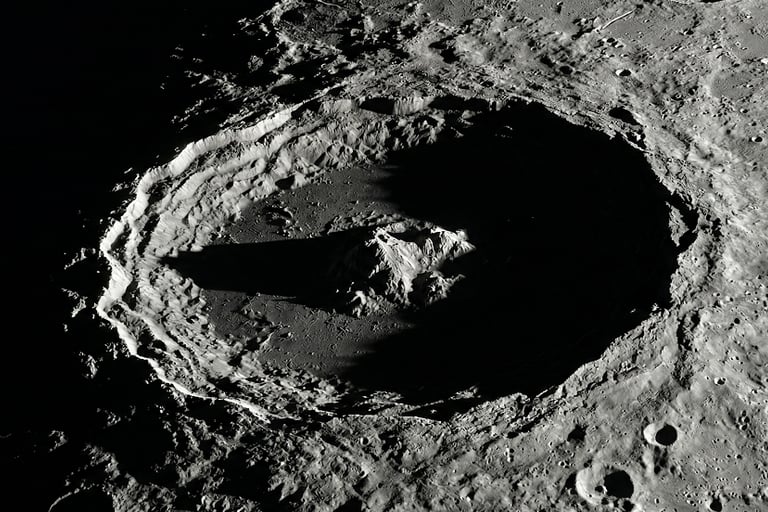
Early April (The Full Phase): Best for seeing the bright "rays" of material ejected from young craters like Tycho.
Mid-April (Waning Phases): Ideal for viewing the vast "Maria" (Seas) like the Sea of Tranquility.
Late April (The Crescent): The perfect time to see the "Earthshine"—where the dark part of the Moon is faintly lit by sunlight reflecting off the Earth.
Essential Gear: Bringing the Moon Closer
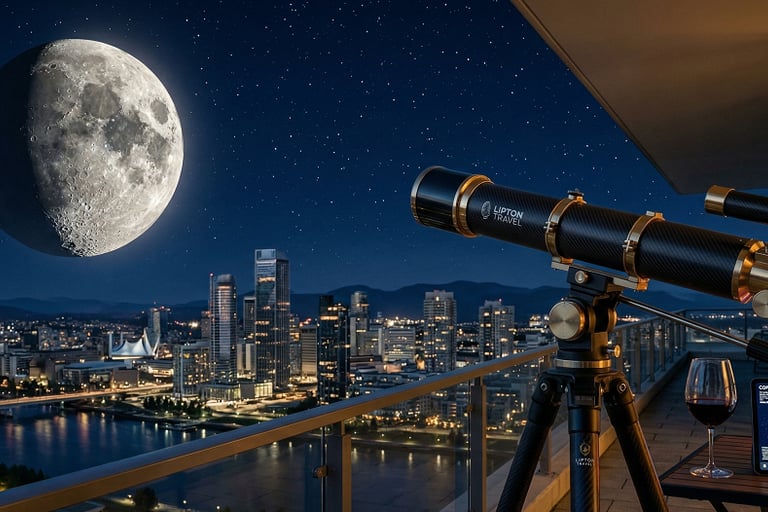
You don't need a professional observatory to explore the lunar surface. In fact, many high-end travelers prefer the portability of premium binoculars. A quality pair of 10x50 binoculars will reveal hundreds of craters and the jagged "Apennine" mountains that look like a spine across the lunar face.
For those who want to see individual boulders or the delicate rilles (valleys) on the crater floors, a small refractor telescope is the way to go. We recommend browsing the curated selection of travel-ready scopes at High Point Scientific to find an instrument that fits in your carry-on.
If you are currently staying at a luxury eco-lodge or a dark-sky retreat, check if they offer "Lunar Photography" workshops. Many Viator experiences now include sessions where expert guides help you attach your smartphone or DSLR to a professional telescope to capture the Moon in scientific-grade detail.
Navigating the Seas and Craters
When you first look through glass, the Moon can seem like an overwhelming mess of gray. To help, this lunar viewing for beginners guide identifies the three most iconic "anchor points" to find tonight:
Sea of Tranquility (Mare Tranquillitatis): Famous as the landing site of Apollo 11, this vast, dark plain is easily visible to the naked eye as one of the Moon's "eyes."
Tycho Crater: Located in the southern highlands, this crater is the "belly button" of the Moon. Its bright white rays of dust stretch for thousands of miles across the surface.
The Apennines: This mountain range towers over 15,000 feet high. During the First Quarter moon, they cast shadows across the Sea of Rains that look like dark daggers.
Photography: Capturing the Silver World
In 2026, smartphone sensors have reached a point where "iPhone-ography" of the Moon is incredibly rewarding. To succeed, the most important factor is exposure control. Because the Moon is a sunlit rock in a dark sky, your camera will often try to "brighten" the scene, resulting in a white, glowing blob with no detail.
Tap on the Moon on your screen and slide the exposure brightness down until you see the gray textures of the craters appear. For even better results, use a "Phone-to-Eyepiece" adapter. These simple clamps allow you to align your phone lens with the telescope's eyepiece, effectively turning the telescope into a massive 1000mm lens for your phone. You can find these accessories at specialized optics retailers like High Point Scientific.
Frequently Asked Questions
Is there a best time of night to look at the Moon?
While the Moon can be seen whenever it is above the horizon, it is best viewed when it is highest in the sky. When the Moon is low, you are looking through more of Earth's turbulent atmosphere, which makes the image look like it's "shimmering" or out of focus.
Can I see the Apollo landing sites with a home telescope?
The simple answer is no. Even the most powerful telescopes on Earth cannot see the small lunar modules left behind by the Apollo astronauts. However, you can easily see the vast Sea of Tranquility where they landed, which provides a profound sense of scale.
Does the Moon look different from the Southern Hemisphere?
Yes! To observers in the Southern Hemisphere, the Moon appears upside down compared to the view from the North. The "Man in the Moon" might look more like a rabbit or a completely different figure depending on where you are standing on Earth.
The Lipton Night Sky Checklist
Check the Phase: Use a lunar app to find the "Terminator Line" location for tonight.
Wait for Height: Observe when the Moon is at least 30 degrees above the horizon for the sharpest views.
Find the Seas: Identify at least three major "Maria" (dark plains) with your naked eye.
Steady Your View: If using binoculars, lean against a wall or car to stop the "shaking" and see more detail.
Dim Your Lights: Even though the Moon is bright, turning off nearby porch lights will improve the contrast of your view.
Questions or thoughts? Reach out anytime. Email Mike at info@liptontravelcom
© 2025. All rights reserved.