Viewing Galaxies in April Guide
Viewing Galaxies in April Guide: See the Deep Universe Meta Description: Explore the cosmos with our viewing galaxies in April guide. Discover the Leo Triplet and Virgo Cluster under the darkest skies of the 2026 spring season.
GALAXIES
4 min read
The Great Deep-Sky Window: Your Viewing Galaxies in April Guide
As the vibrant winter stars of Orion and Sirius dip below the western horizon, a silent, vast window opens in our night sky. This is "Galaxy Season," a unique time when our planet faces away from the crowded, dusty center of our own Milky Way. This viewing galaxies in April guide is your roadmap to peering past the local stars and into the heart of the deep universe.
In 2026, the "Noctourism" movement has reached its zenith, with travelers seeking the profound silence of intergalactic space. April offers the perfect geometry for this pursuit, as the "Galactic Pole" sits high overhead, stripping away the hazy veil of our own galaxy. For the adventurer at Lipton Travel, this is the month to witness light that has traveled for tens of millions of years just to meet your eye.
Why the Spring Sky Offers the Best Intergalactic Views
To understand the value of this viewing galaxies in April guide, one must understand the Earth's orientation in the spring. During the summer and winter, we are looking into the thick spiral arms of the Milky Way, filled with gas, dust, and billions of nearby stars. In April, we look "up" out of the galactic disk, much like looking out a skylight in a crowded house.
This clear line of sight allows us to see the "Grand Design" spirals and elliptical giants of the Virgo and Coma clusters. Without the interference of local nebulae, the contrast of the deep sky becomes significantly sharper. This is the ultimate "See Now" moment for those who find beauty in the ancient and the distant.
For the most immersive experience, you should plan your excursion to a certified International Dark Sky Park. Locations like the high-altitude plains of Namibia or the volcanic peaks of the Canary Islands offer the atmospheric transparency required for galaxy hunting. You can book specialized "Deep Sky Expeditions" through Viator to access these remote, light-pollution-free zones.
The "Big Three" Targets in Your Viewing Galaxies in April Guide
While thousands of galaxies are visible this month, three specific targets offer the most rewarding experience for the modern noctourist. These objects represent different types of galactic architecture and are surprisingly accessible with the right optics.
The Leo Triplet: A Galactic Neighborhood
Located in the haunches of the constellation Leo, this group consists of M65, M66, and the "Hamburger Galaxy" (NGC 3628). Through a high-end telescope, you can see all three in a single field of view, appearing as three distinct glowing smudges. They are roughly 35 million light-years away, meaning the light you see tonight began its journey when early primates were first appearing on Earth.
Markarian’s Chain: The Heart of Virgo
For those with larger apertures, the Virgo Cluster offers Markarian’s Chain, a breathtaking arc of galaxies that appear to be "linked" across the sky. This is the gravitational center of our local supercluster, a dense city of galaxies. Seeing the chain requires a dark sky, but once found, it provides a sense of cosmic scale that is truly humbling.
Bode’s Galaxy and the Cigar Galaxy (M81 & M82)
Found near the Big Dipper, these two are perhaps the most famous duo in the sky. M81 is a classic spiral, while M82 is a "Starburst" galaxy undergoing intense internal upheaval. The contrast between the two is a highlight of any April stargazing session. To see the spiral arms of M81, you will need specialized optics like those found at High Point Scientific.
Tools of the Trade: Equipment for Deep Sky Exploration
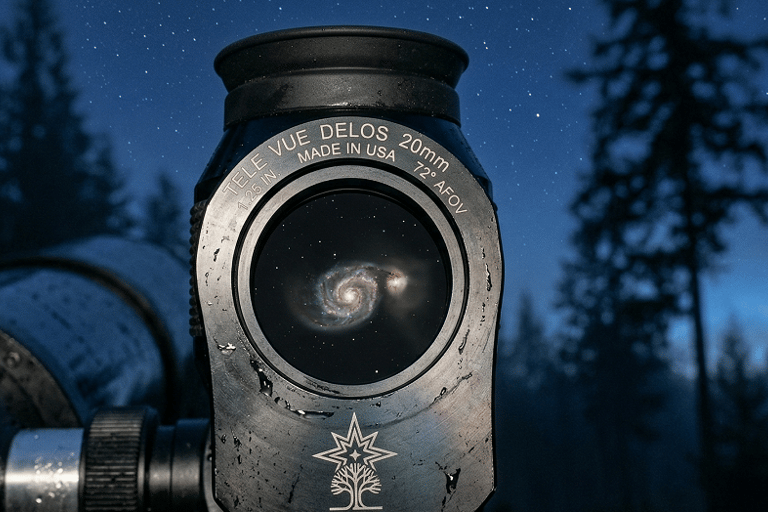
Deep sky viewing is less about magnification and more about "light bucket" capability. Because galaxies are faint and extended objects, you need a large objective lens or mirror to gather as many photons as possible. A pair of 20x80 astronomical binoculars is a fantastic starting point for the Leo Triplet.
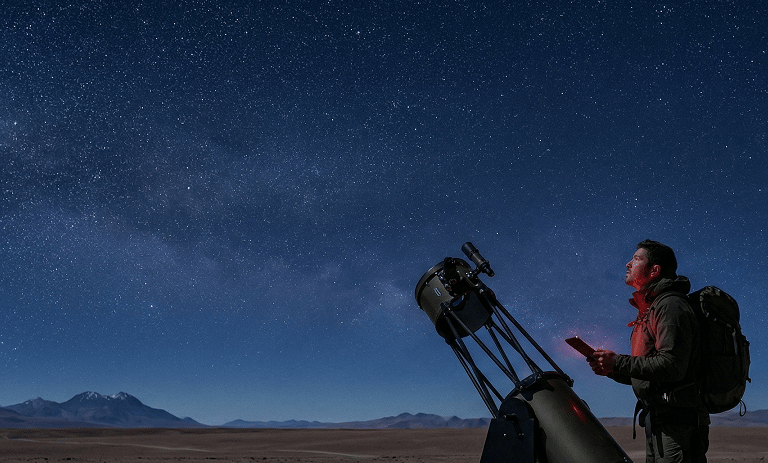
However, to resolve the dust lanes of the Cigar Galaxy or the core of M66, a telescope with at least 8 inches of aperture is recommended. The "Dobsonian" design is the favorite of the Lipton Travel team for its stability and massive light-gathering power. You can also hire professional-grade equipment through guided tours on Viator, which often include an expert "Star Guide" to handle the alignment.
Mastering the Art of "Averted Vision"
One of the most essential tips in this viewing galaxies in April guide is a technique called averted vision. Our eyes are not evolved to see faint, gray objects in the center of our field of vision. The center of our retina (the fovea) is packed with color-sensing "cones" that require bright light to function.
To see a faint galaxy, you must look slightly to the side of the object. This allows the light to fall on the "rods" at the edge of your retina, which are much more sensitive to low light. It feels counterintuitive at first, but suddenly, a faint smudge will "pop" into a detailed spiral. This is the "Aha!" moment of deep-sky noctourism.
Frequently Asked Questions
Can I see galaxies with the naked eye during April?
Apart from the Andromeda Galaxy (which is better seen in autumn) and the Magellanic Clouds in the Southern Hemisphere, most galaxies require binoculars or a telescope. However, under a Bortle 1 sky, the Triangulum Galaxy can occasionally be glimpsed by those with exceptional vision.
What is the best moon phase for galaxy hunting?
You must plan your galaxy viewing for the week of the New Moon. Even a small amount of moonlight will "wash out" the faint light of distant galaxies, rendering them invisible.
Do galaxies look like the photos in the telescope?
No. To the human eye, galaxies appear as "faint fuzzies" in shades of gray and silver. Our eyes cannot integrate light over long periods like a camera sensor, but seeing the actual photons with your own eyes is a far more moving experience than looking at a screen.
The Lipton Night Sky Checklist
The New Moon Window: Ensure you are viewing within 3 days of the New Moon for maximum contrast.
Aperture First: Use binoculars or a telescope with at least a 50mm (for binoculars) or 150mm (for telescopes) opening.
Identify Leo: Use the "Sickle" of Leo to find the Leo Triplet between the stars Chertan and Iota Leonis.
Dark Adaptation: Spend at least 30 minutes in total darkness with no phone screens before viewing.
Check the Transparency: Look for a night with "high transparency" on your weather app to ensure minimal atmospheric dust.
Questions or thoughts? Reach out anytime. Email Mike at info@liptontravelcom
© 2025. All rights reserved.